The Clinical Neuropsychology Service (CNS) at our center offers outpatient pediatric neuropsychological evaluations for children and teens aged 3-17.

 

What is a pediatric neuropsychological evaluation?

A pediatric neuropsychological evaluation explores various thinking skills in order to provide diagnostic impressions and comprehensive recommendations. The evaluation entails a clinical interview with the pediatric patient and their family, administration of standardized neuropsychological tests, and interactive feedback, all of which are summarized within a written evaluation. Example domains assessed by a neuropsychologist includes the following:

  • Academics
  • Attention and Executive Functioning
  • Daily Living Skills
  • Emotional and Behavioral Functioning
  • Fine Motor Functioning
  • Intelligence
  • Language
  • Learning and Memory
  • Nonverbal Skills
  • Social Skills


At the CCF, neuropsychological evaluations are supervised by Dr. Piña-Anastasiadis, who specializes in pediatric neuropsychology and neurorehabilitation. Because the CCF CNS is a university-based clinic at FIU, doctoral-level trainees who are learning how to conduct evaluations are often involved throughout the assessment process.

Who can benefit from this type of evaluation?

Several pediatric patients would benefit from a neuropsychological evaluation, including but not limited to the following situations:

  • Patients experiencing persistent symptoms that are attributed to a concussion or mild head injury.
  • Patients who sustained an acquired brain injury and require neurocognitive monitoring following discharge from an inpatient rehabilitation program.
  • Patients with a history of neurological conditions, such as neuroimmunological disorders, strokes or seizures.
  • Patients who were born premature, low birthweight, or exposed to substances prior to birth.
  • Patients who have a history of substance use or other mental illness that may influence thinking skills.
  • Patients prescribed certain medications that affect the brain, such as stimulants or antiepileptics.
  • Patients who are diagnosed with medical conditions, such as genetic disorders, cancer, or cardiovascular disease.
  • Patients struggling with neurocognitive skills, such as attention, learning, or memory.
  • Patients who struggle with social skills, activities of daily living, and/or repetitive behaviors.
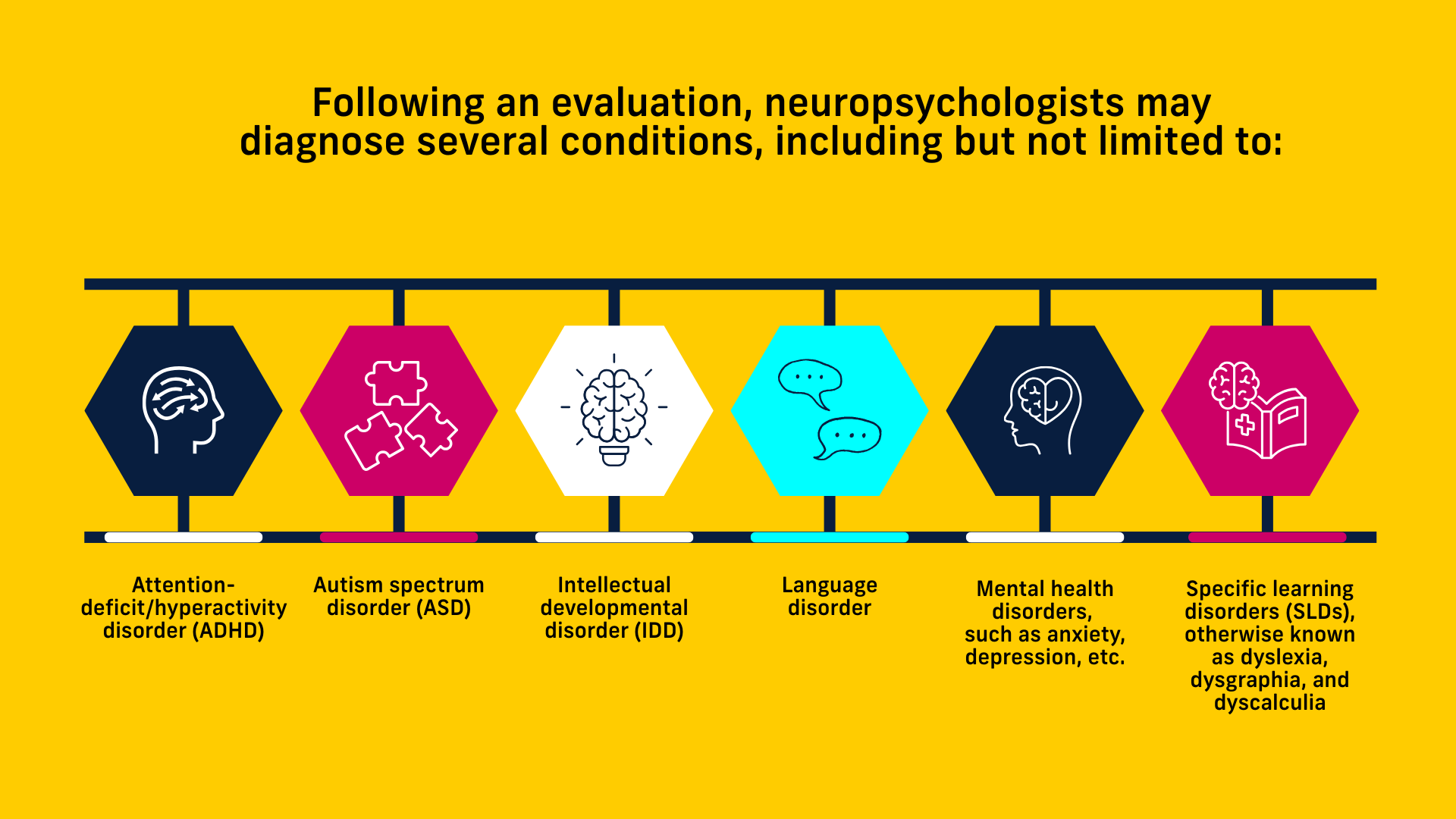
Conditions Graphic

To get started, give us a call at

305-348-0477 or email us at ccf@fiu.edu.

Frequently Asked Questions

  • How does a neuropsychological evaluation differ from a psychoeducational evaluation?

    Although a pediatric neuropsychologist can provide services similar to a psychoeducational or school-based evaluation, the evaluations are not the same. Psychoeducational evaluations often focus on a few domains that affect school, such as intellectual ability, academic achievement, and behavior, to see whether a child is eligible for special education services. By contrast, a neuropsychological evaluation is more comprehensive and integrated, investigating several other neurocognitive domains. Essentially, psychoeducational evaluations typically answer what educational services a child might qualify for, whereas neuropsychological evaluations answer why a child might be having challenges, offer diagnostic impressions, and recommend tailored evidence-based interventions based on a child’s unique neurocognitive profile. Neuropsychologists also link findings from the evaluation to potential causes.

    In addition to a doctorate, a neuropsychologist requires a specialized two-year postdoctoral fellowship in neuropsychology; oftentimes, neuropsychologists also pursue board-certification after they are licensed. Psychoeducational evaluations are often conducted by a licensed school psychologist and/or a multidisciplinary team within the school system; without specialized training, these providers are unable to conduct neuropsychological evaluations.

  • How much does the neuropsychological evaluation cost?

    For families interested in self-pay services, the cost is currently priced at a competitive rate, but prices may vary based on presenting concerns. In addition, in some circumstances, income-based sliding scale discounts are available for families who qualify, and we will work with your family to establish a final quote as soon as possible. In many cases, the established rate will be due by the first appointment. Please contact the CCF for more information on pricing for self-pay evaluations.

  • Does the CCF accept insurance for neuropsychological evaluations?

    Yes! We currently accept several major commercial insurances. If prior authorization for services is required, we will submit documentation in order to support coverage for services. However, we cannot guarantee that services will be covered by insurance. We do not accept Medicaid/Medicare at this time. Please contact the CCF for more information on specific insurances accepted.

  • What should we bring, or complete prior, to our first appointment?

    Prior to your appointment, our team will securely send a variety of forms electronically, including consents, a demographic questionnaire, etc. Please complete all forms prior to the first appointment. Please also bring any relevant medical (e.g., neuroimaging reports, genetic testing results, medical documentation, etc.) or educational (e.g., IEP, Section 504 Plan, prior psychoeducational testing, etc.) records for review. It is also helpful to bring a snack, lunch, and/or water bottle for structured breaks.

  • What does the neuropsychological evaluation process look like at the CCF?

    The first appointment will typically entail an all-day and in-person intake interview and neuropsychological testing directly with the child or teenager at the CCF. Several rating forms will also be provided to the family for completion. There will be several structured breaks, including a longer lunch break mid-day. Feedback on results are often scheduled on a separate day, either virtually or in-person at the CCF. The written report will then be sent virtually via our confidential electronic medical record system.